
Written by George Gardner

Our story begins in Northern Scotland in the small coastal village of Skara Brae in the Orkney Islands. The time is roughly 3000 BC, and the Neolithic settlement is thriving in a revolutionary age of significant human advancement.
Farming has recently begun to be practiced in the UK, and Skara Brae is no exception to the fantastic benefits brought to the table by agriculture.
With an abundance of meat, wool, leather, eggs and more, the future is looking bright.
But the islanders have a problem.
Due to their living on an island, tree supply is limited and thus only a finite amount of wood is available to the community at any given time. In short, the islanders can’t keep up; unable to fuel their fires effectively due to this lack of wood, the islanders cannot cook all of the fresh meat harvested from their new farms. Food is going to waste, and people are beginning to starve as a new reliance on farmed food is undermined by the inability to cook it.
Desperate and seemingly without options, what do the islanders do?
Turn to seaweed, of course!

New evidence uncovered in recent years at the infamous site of Skara Brae, now the most intact Neolithic settlement in all of Europe, presents a compelling case for the benefits of seaweed — taken from the ocean surrounding the home island of the settlement — in fueling fires, presumably in part to keep up with the demand brought on by the agricultural revolution experienced at the time.
A glassy, slag-like substance known to be produced when seaweed is burnt was found in the settlement, contradicting a 1930s observation that peat was used to fuel the fires.
Needless to say, the benefits of seaweed helped Skara Brae continue to thrive for centuries more.
Seaweed in the East

And it’s not just in the West that seaweed has had a significant and somewhat unsung impact. Seaweed has made up a large part of both the Chinese and Japanese diets for thousands of years, with it being eaten in China as early as 2700 BC.
In 600 BC, Chinese writer Sze Teu wrote that seaweed was regarded at the time as a highly valuable and premium food, mostly reserved only for the meals of kings and their special guests from other countries or provinces, and a book was written by Chinese author Chi Han in 300 BC focusing on the different types and multitude of uses of seaweed.
Kelp was also widely eaten in China in the 5th century; Laminaria Japonica, a species of kelp, was often imported directly from Japan.
As for the Japanese themselves, at least six different types of seaweed were used in 800 AD in everyday cooking, and the now common nori seaweed has been used in Japanese sushi dishes since around 1750.
Benefits of seaweed in medicine

Both the Romans and the Greeks used seaweed for medical applications in their times. They and other Mediterranean civilisations recognised the potential for certain kinds of red algae to treat some parasitic worm infections, making it an invaluable resource for the millions who suffered from disease at the time. Red algae was also used as a dying agent, and the Greeks are known to have fed livestock with the abundant seaweed lying on their shores in times as early as 100 BC.
Apart from being fire fuel, food and medicine, seaweed has also served its time as being an effective fertiliser in the agricultural industry. In Ireland, seaweed was collected in abundance from 1200 AD and onwards in order to drive food production rates higher by helping crops to grow that little bit faster. Farmers used algae from the sea as mulch for their crops, acting as a catalyst for their growth; even today, there exists a large but little-known seaweed fertiliser industry in both Ireland and Scotland that helps farmers get the most out of their land.
Future sustainable foods
It may have a long history, but there’s no doubt that seaweed is one of the most essential future foods. As a key source of iodine and iron, as well as a whole host of essential vitamins and minerals, seaweed can help to address key vegan diet deficiences as well as being one of several foods that lower blood sugar.
As a salt substitute, seaweed is also highly effective. Not only does seaweed contain many of the same minerals which are present in salt, but it is also packed full of flavour. This means that you can enjoy tasty dishes and key minerals without worrying about ingesting too much sodium.
Three cheers for seaweed!
Until recently, though, seaweed has been given much less recognition than it deserves. Tasty, abundant, eco-friendly and good for you in so many ways, seaweed is a miraculous sea vegetable!

Thankfully, the huge potential of seaweed is once again appearing in the limelight and, here at Seaweed and Co., we are dedicated to bringing high quality seaweed to you in a way you’ll love.
Whether you’re a business looking to add that little something extra to your revolutionary new food product, or you’re someone just looking for goodness from the sea, we have something for everyone in our range of premium products.
Find out more about how seaweed can impact on your health and wellbeing.
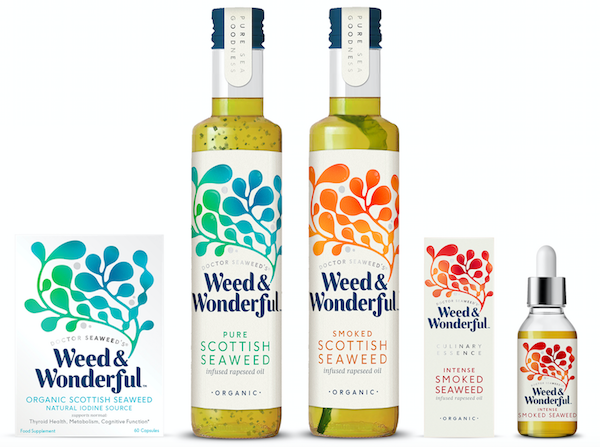
View Doctor Seaweed’s Weed & Wonderful product range
Get in touch for PureSea business enquiries.