
A growing awareness that iodine deficiency is an issue even within developed nations
Awareness around iodine deficiency is growing, and brands are looking for ways to introduce this nutrient while falling in line with key nutrition trends like veganism.
The scale of iodine deficiency in the UK is serious, particularly among girls and women. The UK’s National Diet & Nutrition Survey (NDNS) found that 27% of girls aged 11-18 years old achieved less than the minimum amount of iodine required to prevent deficiency. The same was also true for 15% of adult women.[1]
Part of this widespread deficiency comes from a lack of awareness in the UK in the past. But as one of just two high-income countries to have iodine deficiency issues, awareness is steadily growing, providing an opportunity for food and drink manufacturers looking to offer viable iodine sources to conscious consumers.
And as movements like veganism continue to take center stage, more than ever we’re seeing consumers looking for ways to cut out meat and dairy without sacrificing key nutrients like iodine.
The importance of iodine and the popularity of veganism go hand in hand
The benefits of a vegan diet have been widely reported in recent years, and increasing numbers of consumers are choosing to cut down or cut out their consumption of animal products in favour of a plant-based diet. Over the last 10 years, the number of people following a vegan diet in the UK has increased a massive 360%.[1]
And while there are indeed numerous benefits attached to going vegan, followers of a wholly plant-based diet must be careful in order to avoid missing out on key vitamins, minerals and nutrients.
In the UK, the most common sources of iodine are cow’s milk, eggs and sea fish.[2] As more and more people move away from eating meat, dairy and other animal produce, consumers have found themselves at greater risk of deficiency. One study by the German Federal Institute for Risk Assessment (BfR) found that although vegan diets offered many health benefits – including high fibre intake and lower cholesterol levels – they also meant a greater risk of iodine deficiency symptoms.
Results showed that iodine deficiency was an issue in both vegan and mixed diets, but vegan participants were particularly at risk. A third of vegans who took part in the study had iodine levels lower than 20 micrograms per litre. This is the limit defined by the World Health Organisation as the threshold below which you are classed as dangerously deficient in iodine.[3]
With the number of people following a vegan diet expected to rise a further 400% by 2025[4], the need for viable plant sources of iodine is growing quickly. In fact, we’re already seeing vegan brands make the effort to fortify their products with iodine – brands like Sojade, Natumi and Alpro Soya.
For manufacturers looking to provide the best of both worlds, seaweed can play an important role.
Seaweed is the only viable vegan source of iodine, and PureSea™ offers the highest quality solution for brands
The role of plant-based iodine supply has never been more important, and with the presence of all the minerals, trace elements, vitamins, amino acids and essential fatty acids, no other food can compare to seaweed as the only viable vegan source of iodine. The global diversity of seaweed species means there is a wide range of iodine levels present, but we measure every batch of our seaweed to ensure that our PureSea™ range provides a significant and natural source of iodine. Just one gram of our Scottish Organic seaweed provides as much iodine as three whole mackerel.
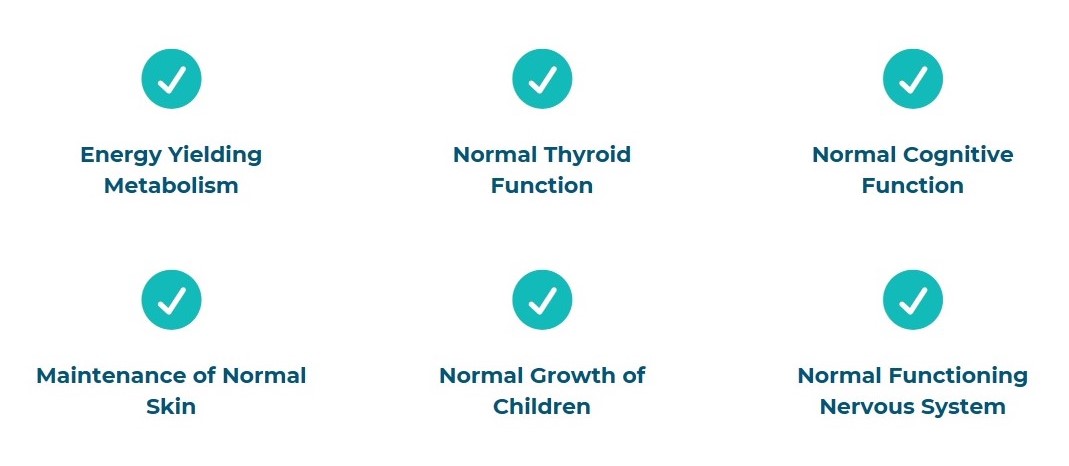
This allows PureSea™ products to boast six EU Approved Health Claims for supporting natural thyroid health, metabolism, skin, cognitive function, nervous system and development of children. Independent analysis shows our seaweed is higher on key measures of quality in comparison to other leading brands.
Our PureSea™ range offers a simple way to introduce the benefits of seaweed to a wide range of food and drink products. Discover the full range on our site today by clicking here.