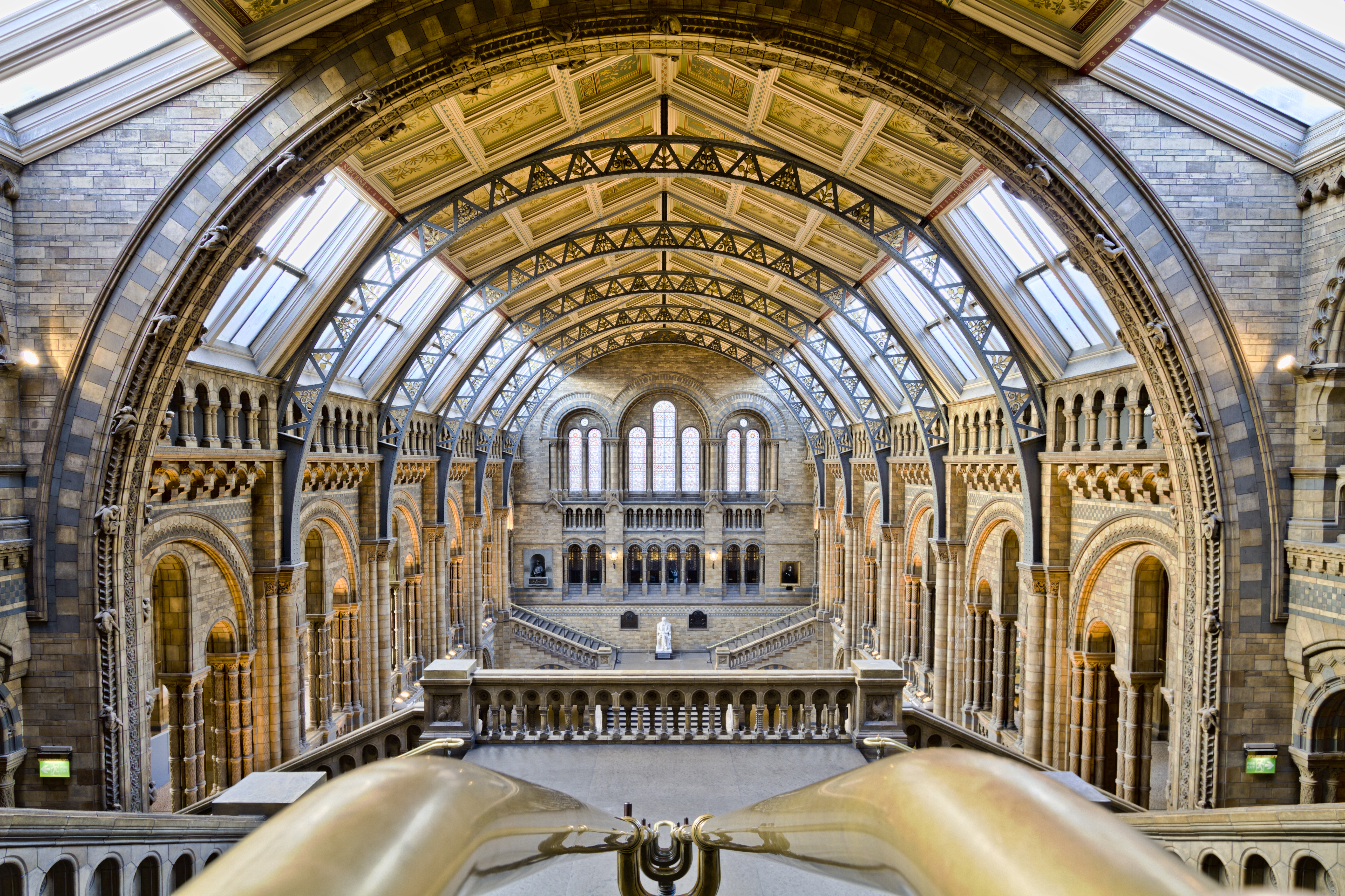
The Natural History Museum (NHM), until 1992, was known as the British Museum. When the museum first opened its doors in April 1881 the main exhibition was a collection of human and animal skeletons. Along with an exhibition of dried plants. Now the NHM is hosting a display to depict an extraordinary underwater seaweed forest, in Hintze Hall!
Seaweed Forest Display
Discover the world of Seaweed, with a window into the world of seaweeds, a hidden habitat under threat. The Natural History Museum exhibit is a display of pressed seaweeds using different types and species to show a seaweed forest.
It features three glass panels of seaweeds collected by Professor Juliet Brodie and her team, “we want to give people a sense of what it is like in the seaweed forest”.
The exhibit is raising the issue of how climate change could bring an end to Algae, as rising ocean temperatures are putting some species at risk. Professor Juliet Brodie seaweed expert at the museum “we know the water is getting warmer, it has gone up by two degrees centigrade in British coastal waters over the last 40 years”. “That might not seem like a lot, but we know that its having a marked effect on some species of seaweed”.
Prof. Brodie designed the work with her team, using seaweeds collected from the shallow subtidal zone and shore in Devon and Pembrokeshire.

Photo credit: Prof. Juliet Brodie, Natural History Museum
History of Seaweed
Fossils of some of the closest relatives of modern day kelp date back 1.6billion years. Showing that the first living organisms before the dinosaurs was Algae! Algae has outlived the dinosaurs and other species that have experienced mass extinction.
Non-native species of British seaweed have made their way onto the coast and into our seaweed forest over 100 years ago. Japanese Wireweed (Sargassum muticm) is an example of this, that has been on our coast for more than 50 years now
Our Seaweed
The exhibit shows a seaweed forest with numerous species/types. At Seaweed & Co. we specialise on just a few types of seaweeds for their nutritional and health properties, and sustainability. Our core seaweed is Hebridean Ascophyllum Seaweed which is part of the Macro-algae family.
It is harvested from the pristine waters surrounding the Scottish Outer Hebrides, and processed using our Patent Pending techniques. For more information about the specific benefits of Hebridean Ascophyllum Seaweed, and our various innovations and other products, contact Doctor Seaweed today!