
Iodine for Pregnancy
Iodine is an important mineral during and after pregnancy. The demand is increased from a recommended 150 μg per day to 250 μg per day to ensure sufficient iodine status. This is to accommodate the mother and the growing foetus. Iodine is key constituent of thyroid hormones which help to regulate the body’s metabolism. Although it also has an especially important role within cognitive development, and the healthy growth of organs and the nervous system during pregnancy. Iodine is most commonly found in white fish and dairy produce however seaweed is the best source naturally. Meanwhile seaweed is also the only natural vegan source – which is important if you don’t eat fish or dairy.
Iodine Status and Turkey
In Turkey, a national household salt iodization programme has been in place since 1998 (industrial salt is not iodized). In addition to that, the rate of Turkish pregnant women using iodized household salt was extremely near to the objectives determined by the World Health Organisation (WHO). However, despite this, regional studies have demonstrated worrying levels of iodine deficiency within the Turkish population.
The Study
The study was conducted in Turkey. It was a cross-sectional survey carried out on a national level. The aim of the study was to assess the iodine status of pregnant women and their new-born children. As with most studies of this nature, urine samples were taken to monitor iodine levels and food frequency questionnaires (FFQ) and normal questionnaires were used to assess things such as age, weight, and economic background.
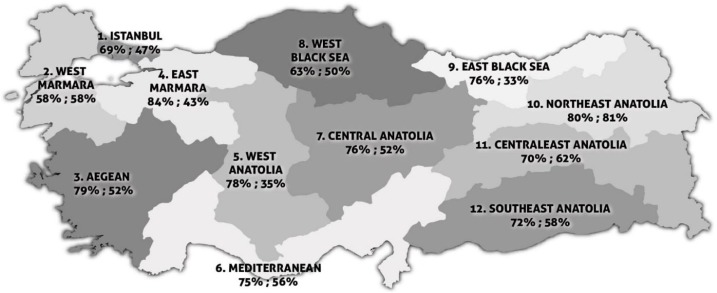
A figure from the study shows the iodine deficiency rates given for each region (pregnant women; offspring).
Results
After the study was completed, there were 1444 samples. They found that the average iodine level was below 100 μg/L with 94 μg/L. This categorises them as mildly deficient by the World Health Organisations (WHO) standards for normal people. The recommended level for prepregnant women is higher at 250 μg/L so the median number is far below that. Out of the 1444, 21% were classed mildly deficient, 30% were classed as moderately deficient and 23% were classed as severely deficient. That’s a staggering 74% of Turkish pregnant women who are classed as deficient in iodine!
For the new-born children, the median iodine status was slightly higher at 96 μg/L. Out of all of the children, 22% were mildly deficient, 15% were moderately deficient and 13% were severely deficient. These figures are lower than the mother’s results however it still highlights that 1 in 2 new-born children in Turkey are iodine deficient.
What is the solution?
In order to tackle this, it is widely advised that increased public health and awareness strategies need to be put in place. Furthermore, expecting and pregnant women should take iodine supplements to ensure that they are sufficient in order to meet the needs of both themselves and their offspring. One popular solution to increase iodine status is to take potassium iodide. However, we recommend talking our Doctor Seaweed’s Weed & Wonderful Organic Scottish Seaweed Capsules. You only need to take one to two a day and they don’t contain any caking or bulking agents like potassium iodide. They are just capsules filled with organic dried and milled seaweed. Furthermore, our seaweed has been shown to outperform potassium iodide as it is released more slowly in the body. This allows for a better retention of iodine, meaning it is more effective as a supplement.
Subscribe now! You will save 33% and get a FREE bottle of Doctor Seaweed’s Weed & Wonderful Pure Organic Seaweed Infused Rapeseed Oil!

